Case study · B2B tech company · October 2026
4.89M Google AI impressions and 127.6K AI citations in three months.

The client is a global B2B tech company. Its buyers are engineers who research carefully before they buy, and more and more of that research starts with a question to an AI. The company is under NDA, so we can't name it. Every number on this page is real.
The screenshots
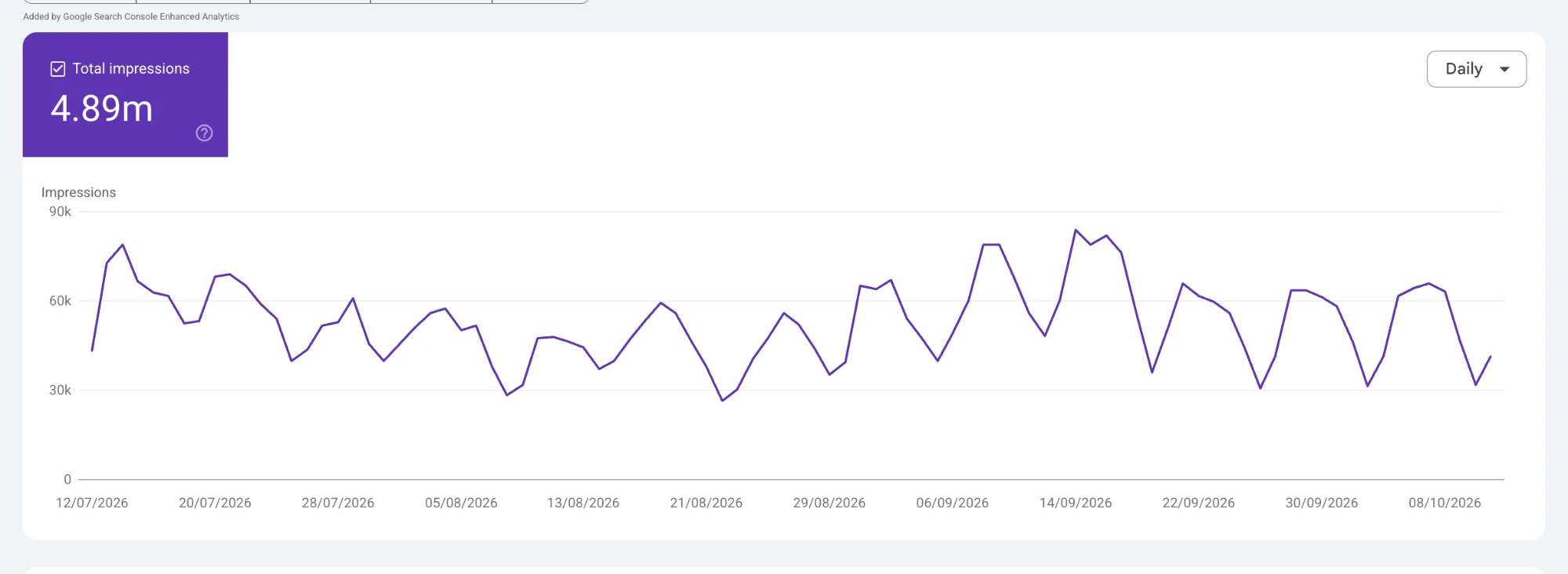
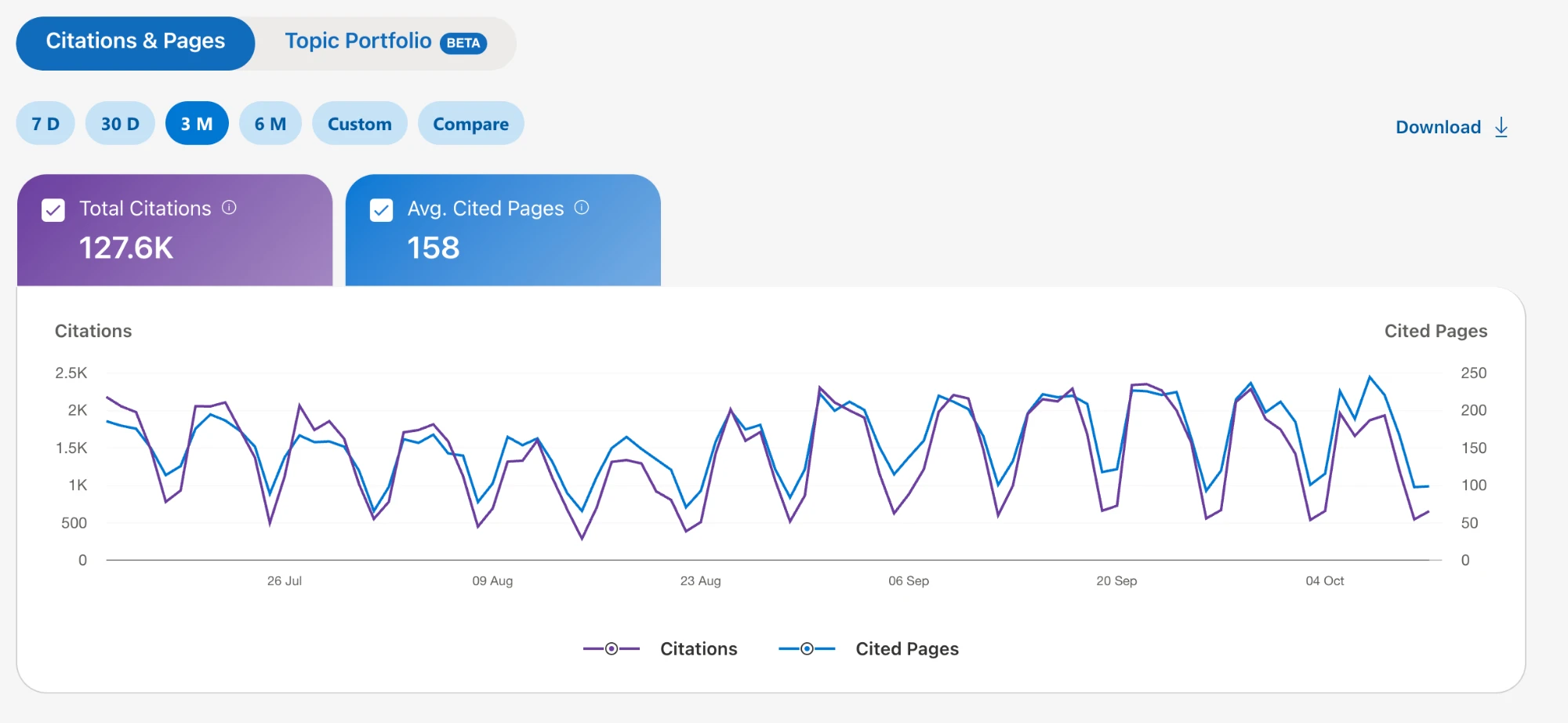
The last number comes from Semrush, an SEO data tool. The site now has 9,499 search terms on Google's first page, up from 7,046 in January.
The five things that mattered most
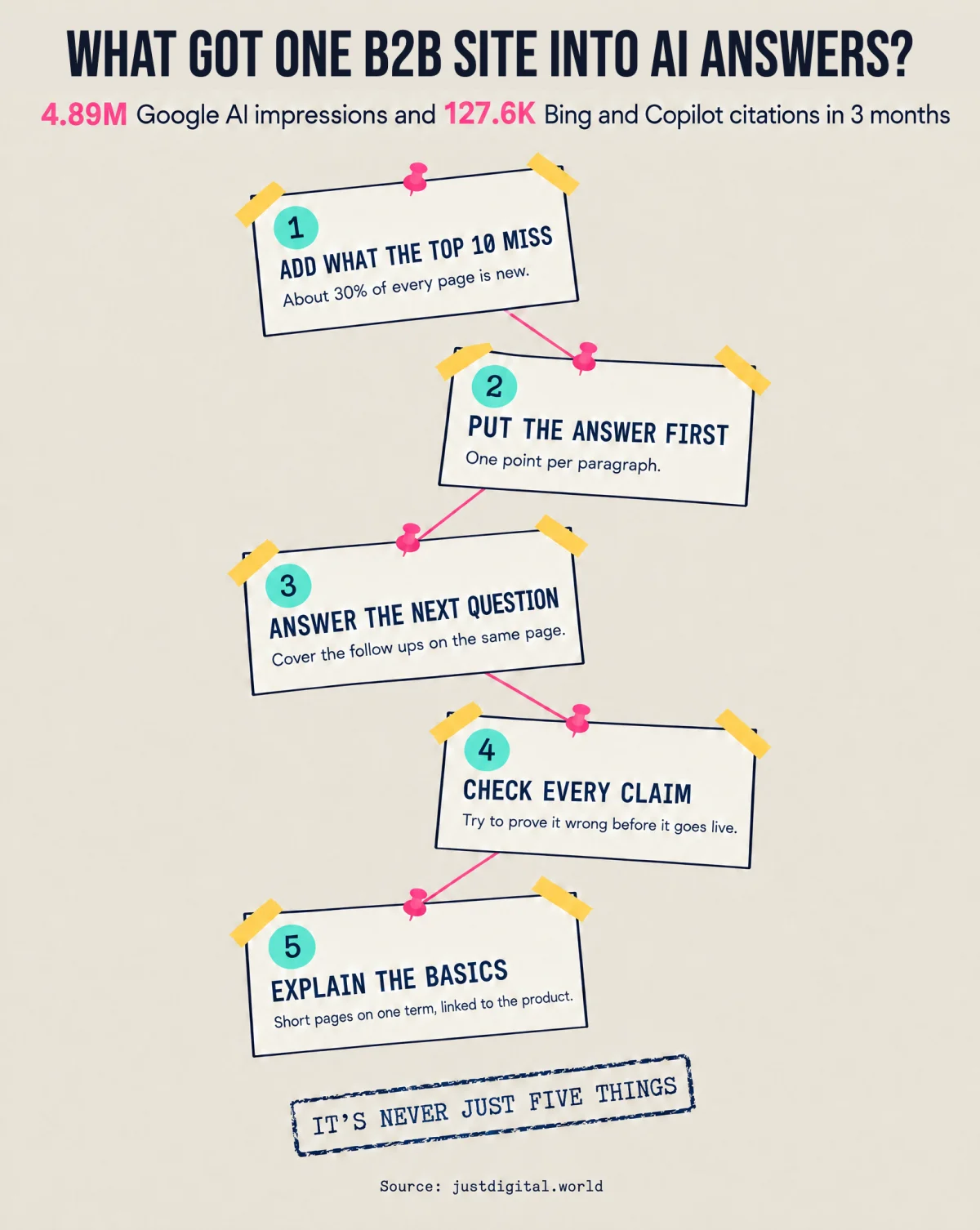
1. Add what the top results don't already say
Before we write anything, we read the ten pages Google already shows for that topic and note what they all cover. A page still needs those basics, but we aim for about 30% of it to be new: things none of those ten pages say. If we can't add anything new, we skip the topic.
2. Put the answer first
Each section opens with the answer, then explains it. Headings are the questions buyers type into Google. Each paragraph makes one point, so an AI can quote a single paragraph and it still makes sense. Where we can, we give a number instead of a word like "fast" or "powerful".
3. Answer the follow-up questions too
When someone asks an AI a question, it also looks up several related questions in the background. So we list what a buyer would ask next and answer it on the same page, plus a short FAQ built from questions people search for.
4. Check every claim
Every fact needs a source we can point to. Product details get checked against the official spec sheet. Then someone tries to prove each claim wrong before the page goes live.
5. Explain the basic terms
The three pages Google's AI showed most all explain a basic term. Each one links to the product the term is about, so a reader who arrives from an AI answer is one click from the product.
It's never just five things
Behind these five there's a 33-step writing and checking process, brand and legal rules, technical fixes so Google can find and read every page, editing rounds, and tracking for 836 search terms, including whether AI answers mention the site. These five made the biggest difference.
Do ChatGPT, Google and Copilot mention your company?
Message Dom on LinkedIn with your website and the topic you'd want them to mention you for.
Message Dom on LinkedInAuf Deutsch: GEO Agentur mit Belegen, die Fallstudie kurz zusammengefasst, mit den fünf Dingen und wie du KI-Sichtbarkeit misst.
Data: Google Search Console, Bing Webmaster Tools, Semrush. Client anonymised under NDA. Prepared by Just Digital, justdigital.world.